
I Love My Partner. I Just Don’t Fancy Sex.
You still love them. You still fancy them. You enjoy being close. But when it comes to actually having sex? You'd quite happily roll over and go to sleep. If that sounds familiar, you're far from alone.
There is a particularly confusing version of low libido that can happen in midlife.
Your relationship is good.
You love your partner.
You find them attractive.
You haven't secretly fallen out of love or started planning an escape to a cottage in Cornwall.
You just...
don't really want sex.
And when the person lying next to you does still want it, that difference in desire can start to feel much bigger than the sex itself.
They may feel rejected.
You may feel guilty.
They initiate, you tense up because you know what's coming, and suddenly even an innocent cuddle carries the possibility of becoming a negotiation.
So what's going on?
And, perhaps more importantly:
Can you get the desire back without turning sex into another thing on your to-do list?
First: loving someone and wanting sex aren't the same thing
This is worth saying clearly.
Your libido isn't a relationship satisfaction meter.
You can be deeply in love with someone and experience very little sexual desire.
Equally, experiencing low desire doesn't automatically mean there's anything wrong with your relationship.
Sexual desire is influenced by a complicated mixture of hormones, physical comfort, sleep, stress, mood, medication, body image, relationship dynamics and what's happening in the rest of your life.
And midlife has a habit of throwing quite a lot of those things at us simultaneously.
Could menopause really affect how much I want sex?
Absolutely.
Changes in sexual desire are commonly reported during perimenopause and menopause.
Hormonal changes may play a part, but libido isn't controlled by one simple "sex hormone".
Falling oestrogen can contribute to vaginal dryness and changes in genital tissues, making sex less comfortable.
Changes in testosterone may also be relevant for some women.
But then there are the indirect effects of menopause.
If you're sleeping badly, experiencing hot flushes, feeling anxious, struggling with your mood or simply not feeling quite at home in your changing body, sex may naturally slide down the priority list.
After a day spent juggling work, family, ageing parents, teenagers, household admin and approximately 47 WhatsApp conversations...
spontaneous ravishing may not be your body's first priority.
"But I used to want sex..."
This can be one of the hardest parts.
Perhaps sex used to be easy.
You'd think about it.
Initiate it.
Look forward to it.
Then somewhere along the way that little spark seems to have disappeared.
It's tempting to assume this means something fundamental has changed between you and your partner.
But desire itself can change.
One particularly useful concept is the difference between spontaneous desire and responsive desire.
You might not want sex until you're actually having sex
Sounds contradictory, doesn't it?
But for many people, particularly in long-term relationships, desire isn't always:
I feel horny → therefore I'd like to have sex.
Sometimes it's more like:
We start being affectionate → I relax → I become aroused → now I'd quite like sex.
That's responsive desire.
You don't necessarily start with a strong sexual urge.
Desire appears after something enjoyable has begun.
Understanding this can be surprisingly reassuring if you've been waiting for the spontaneous "I need you immediately" feeling you remember from earlier in life.
It may not have disappeared.
It may simply need a different route in.
There is an important catch
Responsive desire does not mean:
"I don't want sex, but I'll force myself to do it and hopefully I'll get into it."
Those are very different things.
You should always feel free to say no.
The idea is that you might be open to affection, kissing, touching or intimacy without committing to sex and see whether desire develops naturally.
If it doesn't?
That's okay too.
When every cuddle starts to feel suspicious
Here's something that can quietly cause problems in otherwise happy relationships.
If one partner wants sex more frequently than the other, ordinary physical affection can start becoming loaded.
You think:
If I cuddle him, he'll think I want sex.
So you stop cuddling.
Your partner notices that you've become less affectionate and thinks:
She doesn't even want me touching her anymore.
So they feel rejected.
You both become more distant.
Nobody intended it.
It's simply what happens when affection and sex become bundled together.
One thing that can help is deliberately creating affection that isn't expected to lead anywhere.
Cuddle.
Kiss.
Hold hands.
Have a massage.
Lie naked together.
Whatever feels comfortable.
And occasionally agree beforehand:
We're not having sex tonight.
Removing the destination can make the journey considerably more enjoyable.
What if sex has become uncomfortable?
This is a big one.
If sex has started hurting, your lack of enthusiasm for it isn't particularly mysterious.
Your brain is quite good at remembering things that hurt.
If penetration repeatedly causes dryness, burning, soreness or pain, you may begin avoiding sex before you're even consciously thinking about the discomfort.
Menopause-related vaginal and vulval changes can contribute to painful sex, and there are treatments that can help.
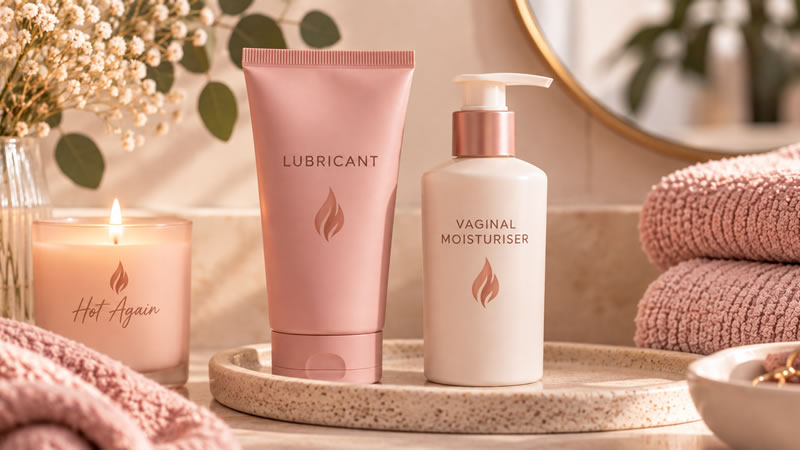
Lubricants, vaginal moisturisers and, where appropriate, treatments such as vaginal oestrogen may make a significant difference.
Don't simply keep having painful sex because you think you should.
Pain is a pretty effective libido killer.
What about HRT?
For some women, treating troublesome menopause symptoms with HRT may indirectly improve their sex life.
If you're sleeping better, feeling more comfortable, experiencing fewer symptoms and generally feeling more like yourself, it makes sense that intimacy might become easier too.
But HRT isn't specifically a libido treatment, and it doesn't magically restore sexual desire for everyone.
If low sexual desire remains a significant problem despite other menopause symptoms being adequately managed, it's worth discussing it with a healthcare professional.
And testosterone?
This gets talked about increasingly in menopause circles.
In the UK, testosterone may be considered for some postmenopausal women experiencing low sexual desire associated with menopause when HRT alone hasn't helped sufficiently.
It's not simply a general-purpose cure for tiredness, brain fog or feeling a bit "meh".
If low sexual desire is causing you distress, a GP or menopause specialist can assess what's going on and discuss whether testosterone or another approach might be appropriate.
Could something else be affecting my libido?
Definitely.
Before blaming everything on menopause, it's worth looking at the wider picture.
Low desire can also be associated with things such as:
- stress
- exhaustion
- anxiety or depression
- relationship difficulties
- painful sex
- poor body confidence
- certain medications
- some health conditions
- alcohol
- lack of privacy
- caring responsibilities
- simply having too much going on
And sometimes there's no single cause.
It's five small things piled on top of each other.
Let's talk about body confidence
Midlife bodies change.
Weight may redistribute.
Breasts change.
Skin changes.
Hair changes.
And suddenly the body you've known for decades can feel slightly unfamiliar.
You might find yourself thinking about your stomach when you'd rather be thinking about what your partner is doing.
Here's the interesting bit:
Your partner may not be looking at your body anything like the way you're looking at it.
They may simply be thinking:
There's the woman I fancy. And she's naked. Excellent.
Sexual confidence doesn't require loving every centimetre of yourself.
Sometimes it starts with allowing yourself to stop inspecting.
Stop trying to recreate your sex life at 25
This might be one of the most useful things you can do.
What worked twenty years ago doesn't necessarily have to be the blueprint now.
Maybe you need longer to become aroused.
Maybe penetration isn't always the main event anymore.
Maybe toys help.
Maybe lubricant makes everything more comfortable.
Maybe morning sex works better because you're exhausted at night.
Maybe planned sex works better than waiting for spontaneous desire.
Yes, planned sex.
It sounds terribly unsexy until you remember that we happily make restaurant reservations and look forward to those.
Anticipation can be part of desire.
But doesn't scheduling sex ruin the spontaneity?
Only if spontaneity is the only kind of sex you're allowed to enjoy.
Planning time together doesn't mean putting:
SEX – 8:30 PM
between "Tesco delivery" and "put bins out".
It might simply mean protecting an evening when neither of you is working late, driving teenagers somewhere or staring at separate screens.
The point isn't obligation.
It's opportunity.
What if my partner takes it personally?
This is where talking about what's happening can make an enormous difference.
If you've repeatedly turned down sex without explaining why, your partner may have created their own explanation.
She doesn't fancy me.
He isn't attracted to me anymore.
There's someone else.
Our relationship is in trouble.
Meanwhile you're thinking:
I love you. I'm just absolutely knackered and my vagina currently has the enthusiasm of a locked fire door.
You don't need to produce a medical presentation.
You could simply say:
"I love you and I'm still attracted to you. My desire just isn't working quite the way it used to, and I'd like us to figure it out together rather than making it a problem between us."
That changes the conversation from you versus me to us versus the problem.
Take the pressure off having "proper sex"
Intimacy doesn't have to follow a script.
Kissing doesn't have to lead to penetration.
A massage doesn't have to become sex.
An orgasm doesn't require intercourse.
And sometimes taking intercourse off the menu temporarily gives you space to rediscover what actually feels pleasurable.
Explore.
Be curious.
Try something different.
You aren't trying to pass an exam.
Could a vibrator help?
It might.
Changes in hormones and blood flow can mean some women find that arousal or orgasm takes longer than it once did.
A vibrator can provide stronger, more consistent stimulation and may simply make things easier.
That's not replacing your partner.
It's equipment.
Nobody accuses an electric toothbrush of ruining the relationship between you and your teeth.
Start smaller than "getting my sex drive back"
If sex currently feels like a huge issue, setting yourself the goal of becoming wildly sexual again can create even more pressure.
Try something smaller.
I want to enjoy being touched again.
Or:
I want kissing to feel exciting again.
Or:
I want to work out what feels good in my body now.
Desire doesn't necessarily return with fireworks.
Sometimes it starts as curiosity.
What if I'm actually happy not having sex?
Then this matters:
There is no correct amount of sex you should be having.
Some couples have sex several times a week.
Some several times a year.
Some don't have sex at all and are perfectly happy.
Low libido only really becomes a problem when it's a problem for you or your relationship.
You don't need treatment simply because your sex drive doesn't match somebody else's idea of normal.
When should I talk to someone?
Consider speaking to your GP, menopause specialist or another qualified healthcare professional if your loss of sexual desire is persistent, bothers you, has changed significantly, or is affecting your wellbeing or relationship.
It's particularly worth getting advice if you're also experiencing painful sex, vaginal dryness, low mood or other menopause symptoms.
Depending on what's contributing, the answer may involve treating vaginal symptoms, reviewing medication, adjusting menopause treatment, addressing pelvic-floor problems, considering psychosexual support or relationship counselling, or discussing whether testosterone might be appropriate.
There isn't one solution because there isn't one cause.
Hot Again says...
You haven't stopped loving your partner just because your libido has gone quiet.
And you don't have to start having sex you don't want in an attempt to prove otherwise.
Talk.
Take away some of the pressure.
Sort out anything that's making sex physically uncomfortable.
Give yourself more time to become aroused.
Experiment with what feels good now, rather than trying to recreate what worked twenty years ago.
And remember that desire doesn't always arrive first.
Sometimes you have to give it somewhere comfortable to land.
The spark may still be there. It might just need slightly different kindling.
This article provides general information and isn't a substitute for individual medical advice. Changes in sexual desire can have physical, psychological, hormonal and relationship-related causes. Speak to a qualified healthcare professional if you're concerned about a persistent change in libido or other symptoms.