Sex used to be fine. Now it feels dry, sore, uncomfortable – or downright painful. If this has happened to you during perimenopause or menopause, there may be a surprisingly straightforward explanation. And there are things that can help.
Nobody particularly prepares you for this one.
Hot flushes? We’ve all heard about those.
Periods becoming unpredictable? Expected.
But suddenly discovering that sex – something you've been doing perfectly happily for years – hurts?
That can come as a bit of a shock.
Maybe penetration feels uncomfortable at first. Perhaps there's a burning or stinging sensation. You might feel sore afterwards, experience irritation that seems to come from nowhere, or find that sex has gradually become something you avoid because you know it's going to hurt.
And then comes the inevitable question:
Is this really another menopause thing?
It certainly can be.
Why can sex become painful during menopause?
One of the main culprits is falling oestrogen.
Oestrogen helps maintain the tissues of the vagina and vulva. As oestrogen levels decline around menopause, these tissues can become thinner, drier and less elastic.
There can also be less natural lubrication during arousal.
The result?
Something that previously felt comfortable can start to feel dry, tight, sore or painful.
These changes are part of something called Genitourinary Syndrome of Menopause, usually shortened to GSM.
Not exactly the catchiest name, admittedly.
But it's useful to know about because GSM is common – and, importantly, it can be treated.
What does vaginal dryness actually feel like?
It isn't always as obvious as simply thinking, "I feel dry."
Menopause-related vaginal and vulval symptoms can include:
- dryness
- burning
- itching or irritation
- soreness
- discomfort during penetration
- pain during or after sex
- reduced natural lubrication
- a feeling of tightness
- needing to wee more frequently or urgently
- recurrent urinary tract infections
You might have several of these symptoms or only one.
And they can begin during perimenopause – you don't need to have stopped having periods for them to appear.
Why nobody seems to talk about it
We are getting much better at talking about menopause.
But vaginal symptoms still seem to get whispered about.
Women will happily compare notes about hot flushes over coffee, yet saying, "Actually, sex has started hurting," can feel much harder.
That silence matters.
Because it's easy to assume you're the only person experiencing it, that it's simply part of getting older, or – worse – that you need to put up with it.
You don't.
First things first: sex shouldn't be something you endure
If penetration hurts, pushing through the pain usually isn't a great strategy.
Apart from the physical discomfort, your brain is very good at learning from experience.
If sex repeatedly hurts, you can understandably start anticipating that pain.
You tense.
You become less aroused.
Your body produces less lubrication.
Penetration becomes even more uncomfortable.
And before long, you've got yourself a particularly unhelpful cycle:
Pain → anxiety → tension → less arousal → more pain.
Taking the pressure off penetration while you work out what's happening can help break that pattern.
Could lubricant help?
Absolutely.
A good lubricant can reduce friction and make sex considerably more comfortable, particularly if you're producing less natural lubrication than you used to.
And using lubricant doesn't mean there's anything wrong with you or that you're not sufficiently aroused.
Bodies change.
Sometimes they need a helping hand.
There are water-based, silicone-based and oil-based lubricants, and they behave differently. Some are also more suitable than others depending on whether you're using condoms or sex toys.
It's worth finding one that suits your body rather than assuming they're all the same.
But there's an important distinction here.
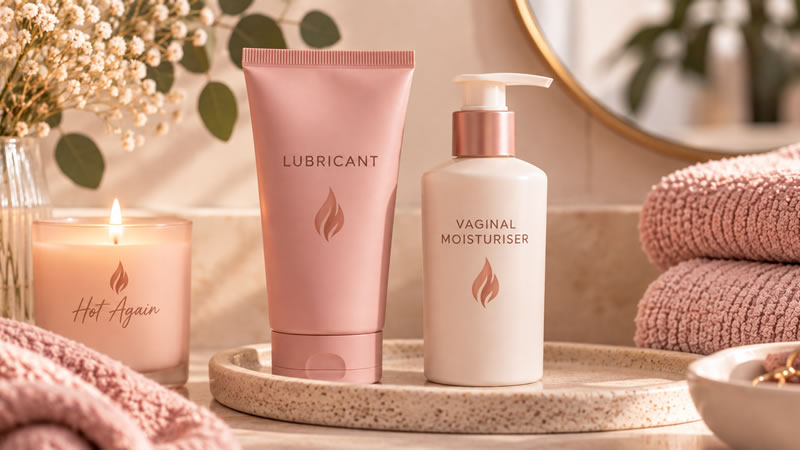
Lubricant and vaginal moisturiser aren't the same thing
This causes a surprising amount of confusion.
Lubricant is generally used when you need it – for example, during sex – to reduce friction.
A vaginal moisturiser is used regularly to help manage ongoing vaginal dryness and discomfort, rather like using moisturiser regularly on dry skin.
If you're experiencing dryness throughout the day rather than only during sex, a vaginal moisturiser may be worth considering.
We'll cover the differences between the two in more detail separately.
What about vaginal oestrogen?
This is something every midlife woman experiencing vaginal or urinary symptoms should at least know exists.
Vaginal oestrogen is a local treatment that delivers a low dose of oestrogen directly to the vaginal tissues.
It's available in different forms, including vaginal tablets, creams, gels or rings.
Because the dose is low and absorption into the rest of the body is minimal compared with systemic HRT, vaginal oestrogen can be suitable for many women, including some who don't use systemic HRT.
It can help improve vaginal dryness, soreness and discomfort and may also help some menopause-related urinary symptoms.
If you're experiencing these problems, it's worth discussing vaginal oestrogen with your GP or another suitably qualified healthcare professional to see whether it's appropriate for you.
And here's something that surprises many women:
You may still need vaginal oestrogen even if you're already taking HRT.
Systemic HRT doesn't always adequately treat GSM symptoms.
Don't forget arousal
Hormonal changes aren't the only thing happening.
Some women find that their bodies simply need more time to become physically aroused than they did previously.
That's important because arousal increases blood flow to the genitals and helps the vagina prepare for penetration.
So if sex has gradually become:
kiss → quick cuddle → straight to penetration
...it may be time to rewrite the running order.
- More kissing.
- More touching.
- Massage.
- Oral sex.
- A vibrator.
Whatever works for you.
This isn't about following some prescribed amount of "foreplay". It's about giving your body enough time to catch up with your brain.
Pelvic floor problems can cause painful sex too
Sometimes vaginal dryness isn't the whole story.
The pelvic floor muscles can become tight or overactive, making penetration uncomfortable or painful.
This is one reason simply applying more lubricant doesn't solve painful sex for everyone.
A specialist pelvic health physiotherapist can assess what's happening and may be able to help with relaxation techniques, exercises or other treatments.
If pain continues despite addressing dryness, it's worth asking whether pelvic floor dysfunction could be involved.
But don't automatically blame menopause
This bit is important.
Painful sex around midlife can be caused by menopause – but menopause isn't the only possible explanation.
Infections, skin conditions, pelvic floor problems, endometriosis and other gynaecological conditions can cause pain too.
So a new or persistent symptom shouldn't simply be dismissed as:
"Oh well, I'm nearly 50."
Please get checked if something doesn't feel right.
When should I see my GP?
It's worth speaking to a healthcare professional if sex has become persistently painful or you're experiencing vaginal or vulval symptoms that aren't settling.
And don't delay getting medical advice if you have symptoms such as:
- bleeding after sex
- bleeding after menopause
- unusual vaginal discharge
- sores, lumps or changes to the vulval skin
- persistent pelvic pain
- repeated urinary infections
- pain that is severe or getting worse
Most causes won't turn out to be anything sinister, but these symptoms deserve proper assessment.
What if I've started avoiding sex completely?
That's understandable.
If touching the hot plate hurt last time, you're not exactly rushing to put your hand back on it.
Painful sex can affect desire surprisingly quickly.
You might start avoiding going to bed at the same time as your partner. A cuddle can suddenly feel loaded because you're worried it will lead somewhere. Your partner may interpret your reluctance as rejection.
Before long, something that started as a physical problem can begin affecting the relationship too.
If you can, talk about what's happening.
You don't need to have the solution.
Even saying:
"I still want to be close to you. Sex has just become uncomfortable lately and I need to work out why."
can remove a huge amount of misunderstanding.
And while you're figuring it out, remember that intimacy doesn't have to mean penetration.
You haven't reached the end of your sex life
This may be the most important part.
Painful sex isn't something you should simply accept because you're going through menopause.
Sometimes the solution is relatively simple: more time, more arousal and a good lubricant.
Sometimes ongoing vaginal dryness needs treating.
Sometimes vaginal oestrogen makes a significant difference.
Sometimes you need help from a GP, menopause specialist, pelvic health physiotherapist or another healthcare professional to work out what's going on.
But there are options.
Your body may have changed. That doesn't mean pleasure has an expiry date.
Hot Again says...
Please don't grin and bear it.
Sex isn't supposed to hurt, and continuing because you don't want to disappoint your partner isn't the answer.
Stop if something hurts.
Use more lubricant.
Take penetration off the menu for a while if necessary.
And if the problem continues, ask for help.
There is absolutely nothing embarrassing about telling a healthcare professional that sex has become painful.
They've heard it before.
Probably several times that week.
This article is for general information and isn't a substitute for individual medical advice. Pain during sex can have several causes, so speak to a qualified healthcare professional if you have new, persistent or unexplained symptoms.