If sex has suddenly started to feel uncomfortable, tampons feel like sandpaper, or you’re wondering why on earth you feel dry down there when this was never a problem before — welcome to another one of those menopause symptoms nobody seemed particularly keen to warn us about.
Vaginal dryness is incredibly common during perimenopause and menopause. And while it can be frustrating, uncomfortable and sometimes upsetting, there are things that can genuinely help.
So, no euphemisms and no embarrassment. Let’s talk about what’s going on — and what you can actually do about it.
First, why does menopause cause vaginal dryness?
As we move through perimenopause and menopause, levels of oestrogen fluctuate and eventually decline.
Oestrogen does quite a lot of behind-the-scenes work in the vagina and vulva. It helps keep the tissues plump, elastic, well lubricated and healthy.
When oestrogen levels fall, those tissues can become thinner, drier and less elastic. Natural lubrication may reduce too.
And dryness isn't always the only symptom.
You might notice:
- Burning, itching or irritation
- A feeling of soreness or tenderness
- Discomfort when wearing tight clothes or exercising
- Pain or discomfort during sex
- Tiny tears or bleeding after sex
- Feeling as though you need to wee more frequently
- Recurrent urinary tract infections
- Changes in sensation during sex
Doctors may refer to this collection of symptoms as Genitourinary Syndrome of Menopause (GSM).
It's a rather grand name for something that can have a very real impact on everyday life, relationships and how comfortable you feel in your own body.
And unlike hot flushes, vaginal symptoms don't necessarily disappear once menopause is over. Without treatment, they can persist or sometimes become more noticeable.
The good news? You don't just have to put up with it.
1. Start with a vaginal moisturiser
One of the most useful distinctions to understand is the difference between a vaginal moisturiser and a lubricant.
They're not quite the same thing.
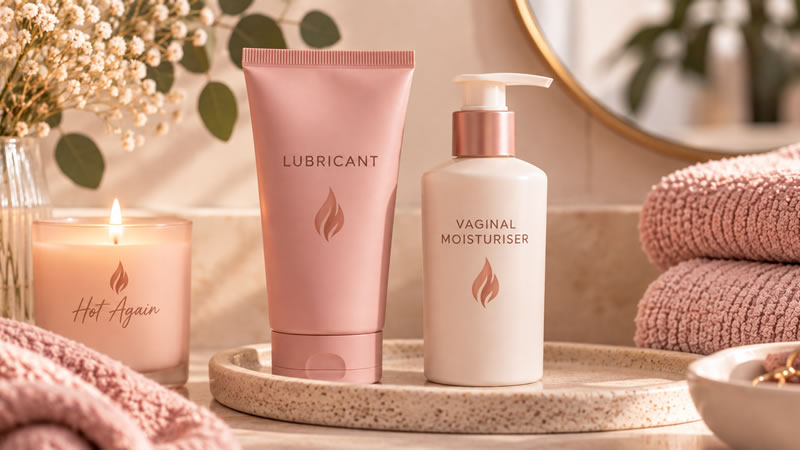
A vaginal moisturiser is designed to be used regularly — not just when you're having sex. Think of it a little like moisturising dry skin.
Depending on the product, you might use it every few days to help maintain moisture and comfort in and around the vagina.
If you're experiencing everyday dryness, irritation or discomfort, rather than dryness only during sex, this can be a very good place to start.
Look for products specifically designed for vaginal use rather than ordinary body creams or lotions.
Your vagina is quite capable of looking after its own pH balance and generally doesn't appreciate us introducing fragranced soaps, creams and other products that weren't designed to be there.
2. Use lubricant — and use enough
If penetration has become uncomfortable, lubricant can make an enormous difference.
And there is absolutely no prize for managing without it.
Natural lubrication can change dramatically during menopause, even when you're completely aroused. Being dry does not necessarily mean you aren't attracted to your partner or don't want sex.
That's an important distinction.
There are several types of lubricant, including water-based and silicone-based formulas.
Water-based lubricants are widely available, generally easy to wash off and compatible with most condoms and sex toys. Some people find they need to reapply them during sex.
Silicone-based lubricants tend to last longer and can be particularly useful when dryness is significant, although you'll need to check compatibility if you're using silicone sex toys.
The important thing is finding one that feels comfortable for you.
And don't be stingy with it.
3. Consider local vaginal oestrogen
If moisturiser and lubricant aren't doing enough, it may be worth speaking to your GP or menopause clinician about vaginal oestrogen.
This is different from taking systemic HRT for symptoms throughout the body.
Vaginal oestrogen is applied directly to the vaginal area and is available in different forms, including creams, tablets/pessaries and vaginal rings.
Because it's used locally, only a small amount is absorbed into the bloodstream.
For many women, vaginal oestrogen can make a significant difference to dryness, soreness and other genitourinary symptoms.
And here's something that's useful to know: you can still experience vaginal dryness even if you're already using HRT.
Systemic HRT doesn't always provide enough oestrogen to the vaginal tissues, so some women use local vaginal oestrogen alongside their usual HRT.
It's worth discussing your individual circumstances with your GP, pharmacist or menopause specialist, particularly if you have a medical history that affects which hormone treatments are suitable for you.
4. Don't push through painful sex
This one matters.
If penetration hurts, stop.
Trying to carry on through pain can create a horrible cycle.
You expect sex to hurt, so your pelvic floor muscles tense up. Penetration then hurts more. Next time you're even more anxious about it — and your body braces itself before you've even started.
Sex shouldn't be an endurance test.
Take penetration off the agenda for a while if necessary.
There are plenty of ways to be intimate that don't involve penetrative sex, and removing the pressure can sometimes make it much easier to rediscover what actually feels good.
More time spent becoming aroused can help with lubrication and blood flow too — although menopause-related dryness can happen regardless of how turned on you are.
5. Be kinder to your vulva
Sometimes we're accidentally making irritation worse.
The vulva generally doesn't need fragranced washes, deodorants, wipes, perfumes or elaborate "feminine hygiene" products.
In fact, these can irritate already-sensitive menopausal skin.
Try keeping things simple.
Wash gently with water or an appropriate unperfumed product if you prefer using one, avoid heavily fragranced bath products around the area and choose breathable underwear if you're feeling irritated.
And no — your vagina does not need to smell like a tropical fruit.
6. Pelvic health can play a part too
Painful sex isn't always caused by dryness alone.
Changes around menopause can affect the pelvic floor, and muscles can sometimes become overly tight — particularly if you've been anticipating pain during penetration.
A specialist pelvic health physiotherapist can assess what's happening and suggest exercises or treatment appropriate for you.
This isn't talked about nearly enough, but pelvic health physiotherapy can be incredibly useful for women experiencing pain, urinary symptoms or changes in sexual function.
7. What about supplements?
You'll find plenty of supplements marketed towards menopausal women and intimate health.
Some contain ingredients such as probiotics, sea buckthorn, vitamins or botanical extracts.
There's growing interest in the relationship between the vaginal microbiome, menopause and intimate health, but supplements shouldn't be viewed as a replacement for treatments with stronger evidence behind them, such as vaginal moisturisers or local vaginal oestrogen where appropriate.
If you want to try a supplement, look carefully at what's actually in it and be wary of products promising to "balance your hormones" or cure vaginal dryness.
At Hot Again, we're much more interested in realistic support than miracle claims.
What if nothing seems to help?
Please don't assume it's "just menopause".
Dryness and discomfort are common during menopause, but other conditions can cause similar symptoms.
Speak to your GP or another healthcare professional if you experience persistent itching or burning, unusual discharge or odour, unexplained bleeding, sores or skin changes, significant pelvic pain, recurrent UTIs, or symptoms that aren't improving.
Bleeding after sex or any vaginal bleeding after menopause should always be checked.
There is absolutely no embarrassment in asking for help with this.
GPs see vulvas and vaginas for a living. Yours will not be the most memorable one they've encountered that week.
And finally...
Vaginal dryness can feel like a surprisingly personal loss.
Something that used to happen naturally suddenly requires moisturiser, lubricant, prescriptions and perhaps a bit more planning.
That can be difficult to adjust to.
But needing lubricant doesn't mean your sex life is over.
Using vaginal oestrogen doesn't mean something has gone wrong with you.
And needing to approach intimacy differently at 45, 50, 55 or 60 doesn't mean you've lost that part of yourself.
Bodies change.
Sometimes we just need a different toolkit.
And finding out what works for your body now can be the beginning of a much better relationship with it.
Still you. Still sexy. Just better equipped.
This article is for general information and isn't a substitute for individual medical advice. If you're experiencing vaginal pain, bleeding, persistent irritation or other symptoms that concern you, speak to your GP or another qualified healthcare professional.
Affiliate note: Some products we recommend may use affiliate links. If you buy something through one of these links, Hot Again may receive a small commission at no additional cost to you. We only feature products we think are genuinely relevant to our readers.